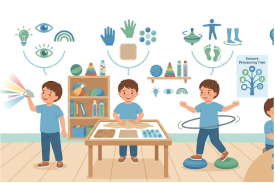
Sensory processing is the way the brain receives, organizes, and responds to information from the senses. These senses include touch, sound, sight, movement, taste, and smell, all of which help children understand and interact with the world around them.
When sensory processing works smoothly, children can participate comfortably in learning, play, social activities, and daily routines. However, some children may find certain sounds, textures, lights, or movements overwhelming or difficult to manage.
Understanding sensory processing challenges early can help parents support their child’s development more effectively. With the right guidance and strategies, children can build confidence, improve participation, and better navigate everyday experiences.